
 By
·
3 minute read
By
·
3 minute read
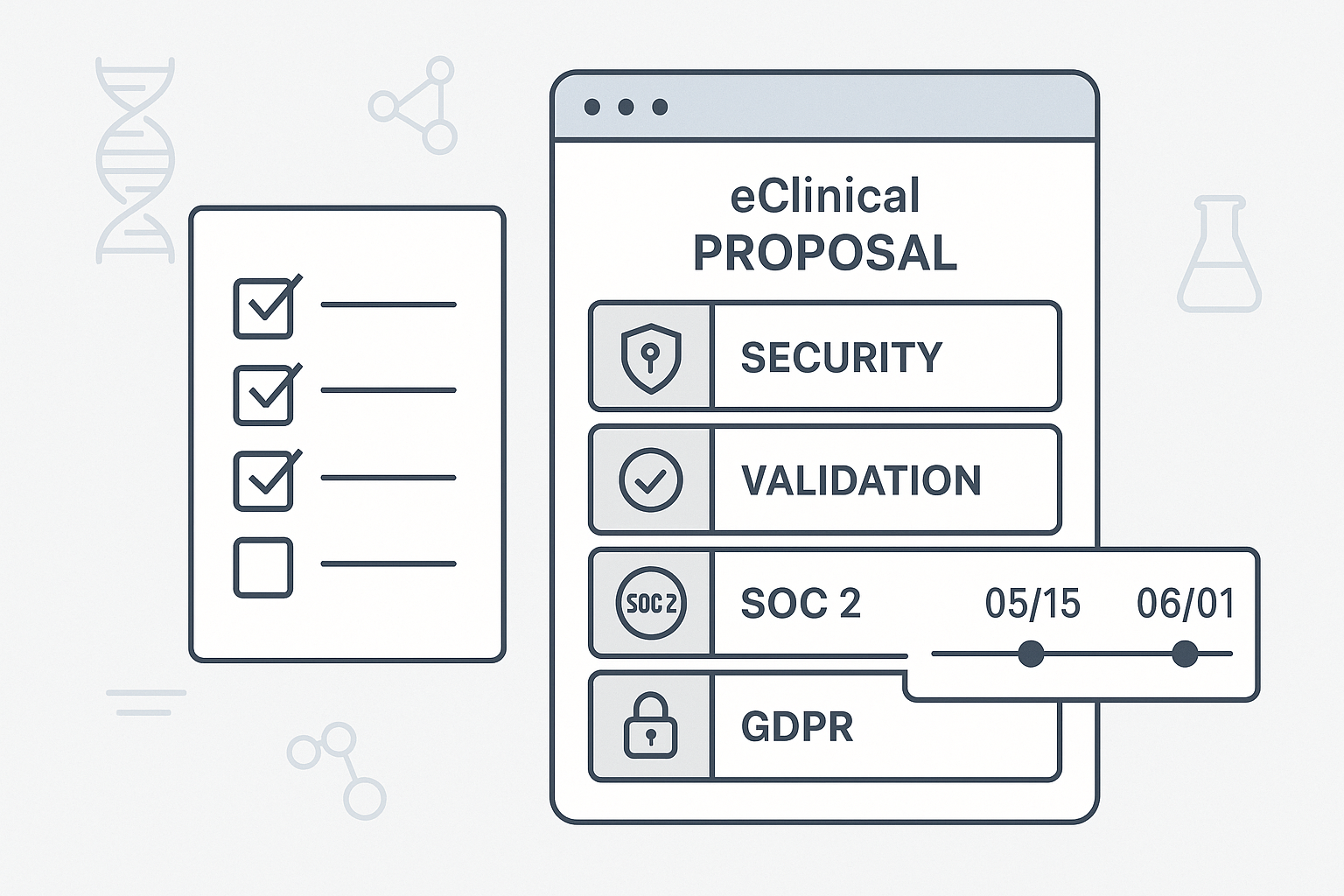
Stand up a compliant RFP engine that wins faster in eClinical.
Build a reusable, compliant RFP engine buyers trust
Late-stage friction during RFPs and RFIs quietly destroys forecast accuracy and burns out teams. In eClinical and CRO markets, requirements around validation, InfoSec, and regulatory alignment raise the stakes even further. Treat RFP/RFI readiness as a core RevOps capability, not an ad-hoc task.
Start by clarifying your ideal RFP profile: where you win, where you lose, and what makes a bid worth the effort. Build a simple Go/No-Go decision tree that weighs ICP fit (sponsor vs. CRO vs. biotech), deal size, timeline, incumbent risk, and must-have requirements (e.g., data residency, language support). This saves time, preserves focus, and helps Sales avoid “hope-bids.”
Then establish a reusable, compliant response engine. Create a centralized content library with pre-approved answers aligned to common questionnaires e.g. functional fit, security, privacy, compliance, validation, and implementation. Tag content by persona and product so proposal managers can assemble responses in hours, not days.
Include evidence: quantified outcomes, implementation timelines, and validation packages. Align the narrative to customer outcomes (e.g. shorter site activation, fewer protocol deviations, higher ePRO completion) rather than a feature checklist. Responsive’s recommendations for RFP best practices lay a strong groundwork for crafting responses that put the customer at the center (see this guide for practical tips you can adopt immediately).
Finally, define roles and cadences. Appoint a proposal manager (can be part-time) who owns intake, timeline, redlines, and submission. Identify SMEs across Security, QA/Validation, Clinical Ops, and Delivery, and set clear SLAs. A weekly 30-minute stand-up during active RFPs keeps tasks unblocked and narratives cohesive.
With this structure, you replace chaos and heroics with a measured, repeatable process that signals credibility to sophisticated buyers.
Orchestrate SME workflows, content, and security answers
Once you’ve decided to bid, execution becomes a choreography problem: dozens of questions across clinical, commercial, and technical domains must be answered precisely and consistently.
Start by mapping the subject-matter expert (SME) graph - InfoSec, QA/Validation, Clinical Operations, Data Management, Legal, Finance, and Delivery - and define ownership for each response domain. Build a tiered content library:
- Boilerplate basics (company overview, 21 CFR Part 11, GxP scope, GDPR/SOC 2 posture)
- Persona-specific value stories (Clinical Ops, Data Mgmt, Procurement)
- Evidence artifacts (case studies with quantified outcomes, validation summaries, pen test letters).
The aim is to answer thoroughly in 150–250 words, with optional appendices for depth. Security and validation questions are increasingly decisive. Maintain up-to-date responses on topics like data residency, subprocessor lists, disaster recovery RPO/RTO, encryption at rest/in transit, SSO/SAML, role-based access controls, and change control.
Pre-approve language with Legal to avoid last-minute redlines. Many proposal platforms share best practices for keeping content current and customer-centered; see practical guidance from Responsive on building smarter responses in this overview and a writing-focused guide on how to craft winning responses in this article.
If you use a response tool, schedule monthly content audits with automated reminders so owners refresh their areas without RevOps chasing them. Operationally, standardize request intake. Every RFP should arrive with a sponsor, deadline, estimated effort, and a proposed win strategy (why us, why now, risks). Run a 30-minute kickoff to confirm the message, assign sections, and identify blockers (e.g., missing SOC 2 letter). Maintain a living Q&A tracker and enforce a 24–48 hour SLA for SME sections so proposal managers can stitch a coherent narrative early, not the night before submission.
Shorten cycles with go/no-go, templates, and analytics
Speed without control creates risk. Build a tight operating system that shortens cycles while protecting accuracy and compliance.
First, enforce a Go/No-Go checklist tied to your ICP, deal size, and capacity. Say no to low-probability, high-effort bids and invest that time in winnable deals.
Second, templatize aggressively. Create a master response shell with sections that map to common buyer frameworks (functional fit, validation, security, implementation, success criteria). Pre-load standard exhibits - references, customer logos (with permission), and architecture diagrams - so every response looks complete from day one.
Third, implement analytics. Track cycle time by section, SME response latency, review rounds, and win rate by RFP source and buyer segment. Use those insights to remove friction and to prove the ROI of proposal investment.
Integrate your proposal engine with the rest of RevOps. Auto-create opportunities and tasks from accepted RFPs, and ensure all Q&A and risks are captured in the CRM. Bring Delivery and Security into the review early to avoid post-signature surprises.
For practical process blueprints and management tips, reference this collection of best practices from Responsive, including RFP management best practices and a step-by-step proposal process guide.
Over two to three quarters, teams that run a disciplined RFP engine see shorter turnaround, fewer escalations, higher scores on security sections, and, most importantly, higher win rates with enterprise buyers who prize rigor. Finally, close the loop.
After every submission, conduct a 30-minute retro: what content slowed us down, what evidence did we lack, what customer theme was strongest? Tag each insight and update the content library and templates the same week. This compounding muscle turns proposals from a hero effort into an efficient, repeatable revenue capability.
Connect with Tessarai today to discover how we can help you achieve operational precision and sustainable growth. Visit our Contact Us page to start the conversation.